Camp Stove Buying Guide
A good stove is the difference between hot coffee at sunrise and a cold, hungry morning. The right one depends on how many people you're feeding, what you like to cook and the weather you'll face. Here's how the main stove types compare.
Start with how you cook
Are you boiling water for coffee and dehydrated meals, or actually cooking: simmering sauces, frying eggs, making pancakes? Are you feeding yourself or a family? Is the stove riding in a car or on your back?
Answering those three questions narrows the field fast. Backpackers who mostly boil water need something light and efficient. Car campers cooking for a group are better off with a stable two-burner with real simmer control.
Canister stoves
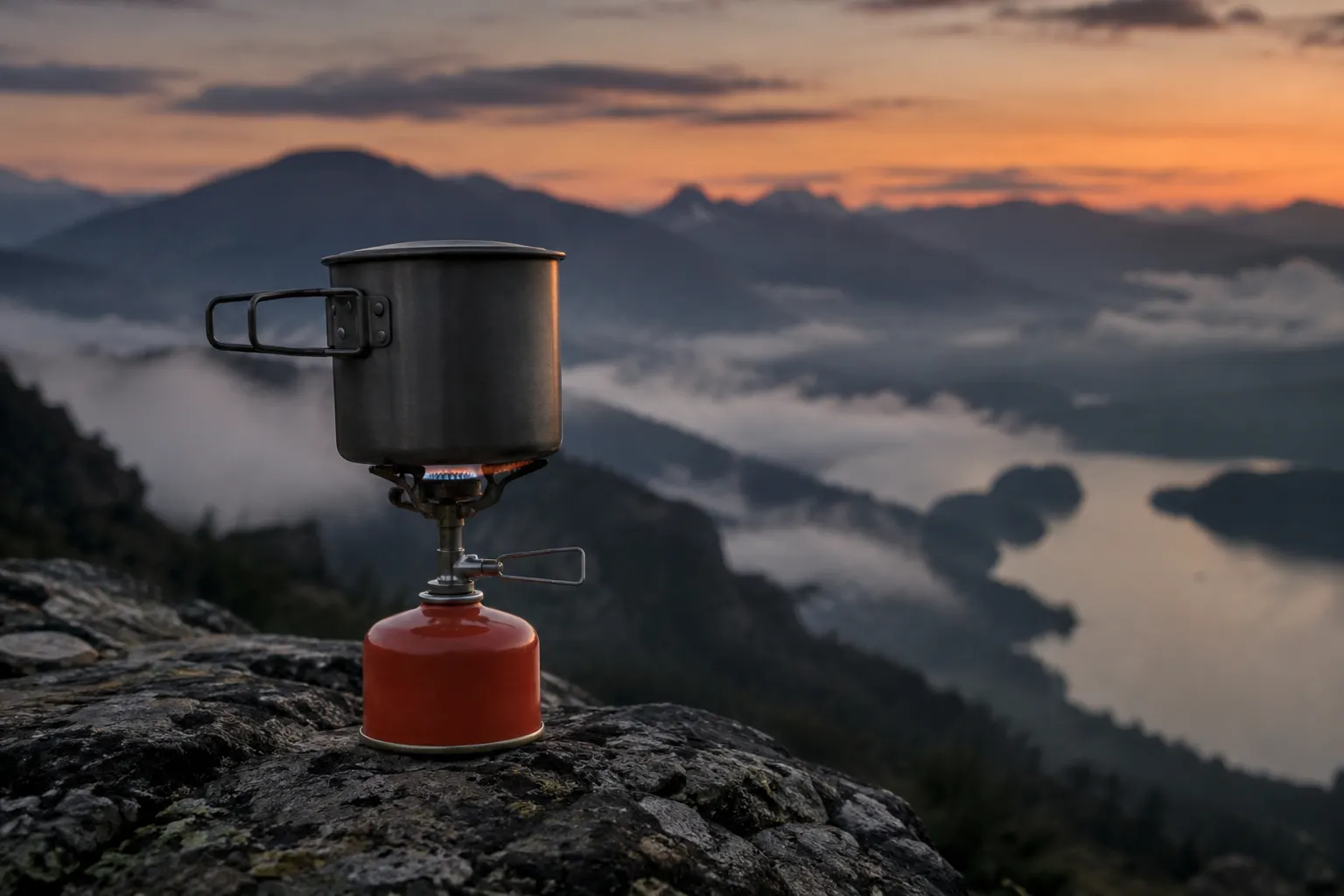
Canister stoves screw onto pressurized cans of isobutane-propane fuel. They're light, compact, clean-burning and easy to use. For most three-season backpacking, they're the default choice.
Their weakness is cold. Canister pressure drops as temperatures fall, and performance suffers near and below freezing. Keeping the canister warm (in your jacket or sleeping bag overnight) helps. Remote-canister models that can invert the can perform better in the cold.
- Upright canister stoves: tiny and light; best for solo and two-person trips.
- Remote canister stoves: lower and more stable, better with larger pots and in cooler weather.
Integrated stove systems
Integrated systems combine a burner, a pot with a built-in heat exchanger and a windscreen into one unit. They boil water very quickly and use fuel efficiently, especially in wind.
The trade-off is versatility. Tall, narrow pots are great for boiling and awkward for real cooking, and many systems don't simmer well. If your meals are mostly add-boiling-water, they're hard to beat.
Liquid-fuel stoves
Liquid-fuel stoves burn white gas from a refillable bottle that you pump to pressurize. Many multi-fuel models also burn kerosene or unleaded gasoline, which makes them popular for international travel.
They work well in cold weather and at altitude, and they're ideal for melting snow. In exchange, they're heavier, need priming, and require occasional cleaning and maintenance.
Alcohol, solid-fuel and wood stoves
Ultralight hikers sometimes choose simpler options. Alcohol stoves are tiny, silent and nearly unbreakable, but slow and hard to see burning in daylight. Solid-fuel tablets are compact and simple but can leave residue on pots. Wood-burning stoves use twigs you find along the way, which saves carrying fuel but depends on dry fuel being available.
All of these are more affected by wind and more likely to be restricted during fire bans. Always check local regulations before you go.
Two-burner camp stoves
For car camping, a two-burner propane stove is the workhorse. It runs on the familiar 1 lb green cylinders or a larger refillable tank with an adapter hose, and it lets you boil water on one burner while you cook on the other.
Look for good simmer control, built-in wind panels, a stable grate that fits your largest pan, and burners spaced widely enough for two pans side by side.
Specs worth comparing
Manufacturer numbers are measured in ideal conditions, but they're still useful for comparison:
- Boil time: usually for 1 liter of water. Wind and cold can double it.
- Weight: compare with the fuel you'll carry, not just the burner.
- Simmer control: essential if you cook anything other than boiling water.
- Ignition: built-in piezo igniters are convenient but can fail; always carry a backup lighter.
- Stability: wider pot supports and a low center of gravity prevent spills.
Safety basics
Never cook inside a tent or a closed vestibule. Stoves can start fires and produce carbon monoxide, which is odorless and deadly in enclosed spaces.
Set up on stable, level ground away from overhanging branches and dry grass, keep fuel away from the flame, and let the stove cool before packing it. Pack out empty canisters and recycle them where facilities accept them.
See where our stoves & cooking testing stands